
Deliberative conversation · Phase 1 · November 2024
The Tax Laws (Amendment) Bill 2024
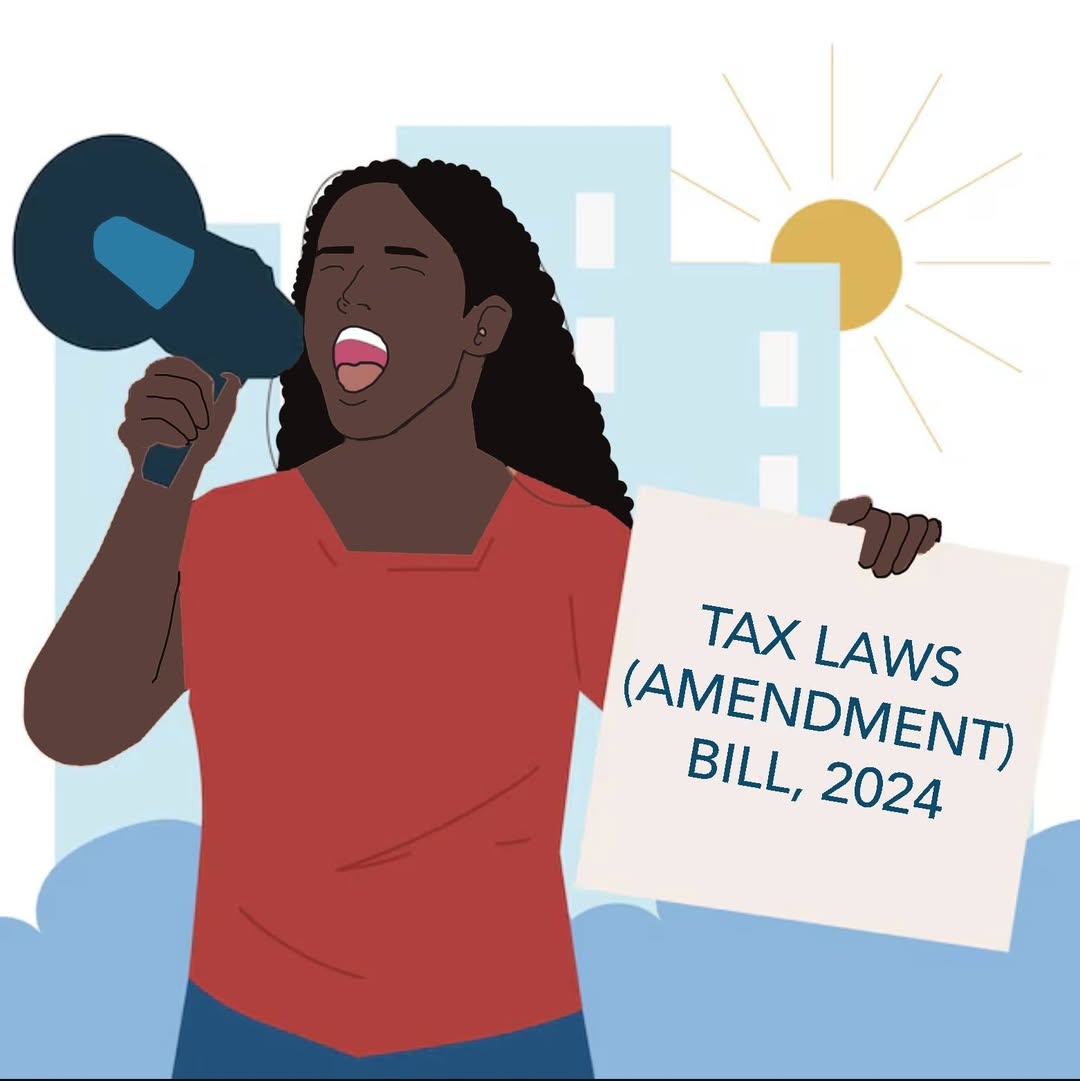
“What would you want included, changed or removed from the Tax Laws (Amendment) Bill 2024?” Taxation sparked the 2024 Gen Z protests, so when the new tax bill opened for public views, zKe asked young people.
WhenPublic views 25 to 28 November 2024
Wherepol.is, X Spaces, Spice FM and youth barazas
At a glance
The conversation in numbers
247
people took part on pol.is
3,436
votes cast
111
statements written by participants
64%
of those who answered said they are Gen Z (91 of 142)
Source: pol.is, conversation 48ntjepisf.
Background
A second try after the Finance Bill
The Tax Laws (Amendment) Bill, 2024 and the Tax Procedures (Amendment) Bill, 2024 followed the withdrawal of the Finance Bill, 2024, which the public rejected in the June 2024 protests. They gave the government another chance to revisit some of the Finance Bill’s proposals. The bill proposed changes to income tax, VAT and excise duty affecting employees, retirees, businesses and multinationals.
Take-home pay
Higher tax-free benefits for employees.
Digital earnings
Taxing earnings from digital platforms.
Local farming
Lower excise duty on products like cassava and sorghum.
Pensions
Tax-free contributions and better benefits for retirees.
What young people agreed on
Show us where our taxes go
These statements had the highest group-informed consensus, across all three opinion groups.
The most agreed statements, in participants’ own words
“Include a section that outlines how the taxes have been used”
94% agreed · 4% disagreed · 108 people voted
“We dont want taxes to go past 25% of our gross salaries.Its like we are slaves working to pay our dues and only take home 39%, this is No!”
93% agreed · 5% disagreed · 107 people voted
“No more taxes, the government account for taxes imposed by curbing corruption. Youths created employment without government assistance.”
88% agreed · 8% disagreed · 100 people voted
“We need to protect the farmers by making farming equipment and materials more accessible an zero rate the taxes of seeds and fertilizer”
93% agreed · 3% disagreed · 70 people voted
“One, we dont want anymore taxes aside from the ones already imposed on us.2, we dont want ecolevy taxes, we want climate finance grants.”
86% agreed · 6% disagreed · 105 people voted
Source: pol.is conversation 48ntjepisf, 247 participants.
Two bills, one confusion
Many young people could not tell the Tax Laws (Amendment) Bill apart from the Finance Bill 2024. Some proposed solutions unrelated to the new bill, and others asked for civic education before any bill is put to the public. zKe made explainers on what the bill covered, but the window for views was short, which left little time for a deeper civic education campaign.
How pol.is works
On pol.is, people write short statements in answer to the question and vote agree, disagree or pass on statements written by others. pol.is then groups people who vote in similar ways, so we can see both what most people agree on and where opinions divide.
A statement with high “group-informed consensus” is one that people agree on even when they disagree on other things. A divisive statement has strong support in one group and strong opposition in another. Percentages on this page are of the people who voted on each statement; the rest passed.
Where views split
Should content creators pay 3%?
“Digital creators should be taxed at 3% when they begin earning over 500,000 Kes monthly from digital services and goods”
Source: pol.is conversation 48ntjepisf. Share of each group who voted on the statement.
The most divisive statements were about taxing digital content creators. Group C almost all agreed that creators earning over 500,000 shillings a month should pay 3%; Group B almost all disagreed. A related statement asked whether creators should carry the same tax burden as employees earning 40,000 shillings, who pay 30%: 34 agreed and 37 disagreed.
Offline and on air
Barazas, X Spaces and radio
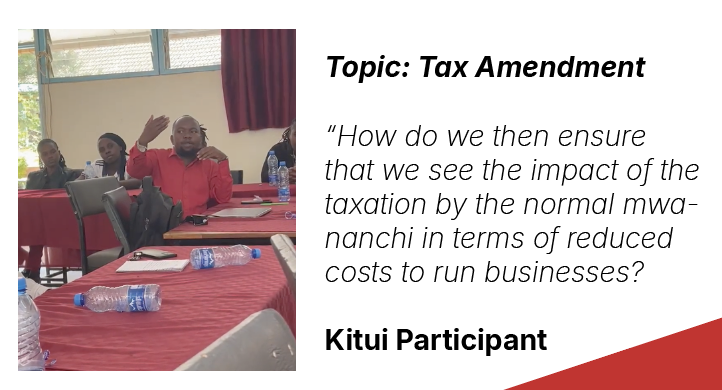
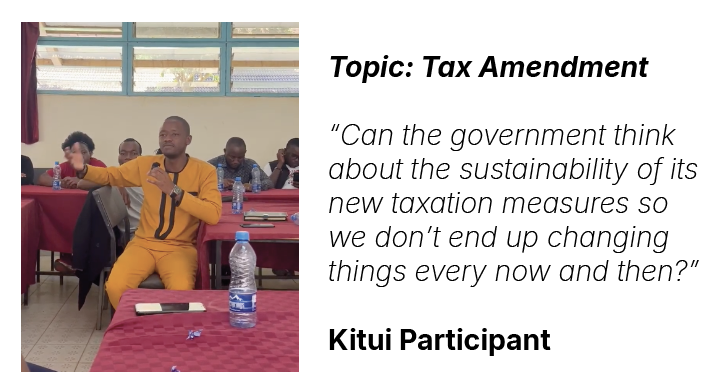
zKe ran youth barazas (community meetings) in Nakuru (14 November 2024), Nairobi (16 November) and Kitui (18 November), with 90 young people, and in Homabay (3 December) and Mombasa (5 December), with 64 more.
Swipe or scroll sideways to see what participants asked. Tap a card to enlarge it.
“The government needs to do a better job at educating the public and especially the youth about such complex issues before floating the bill for public participation.”
Youth baraza participant
In zKe’s X Spaces, most young people were angry about corruption that wastes the money raised through taxes. Their main recommendation: tackle corruption first, so that a wider tax base actually pays for national development. On 5 December 2024, the day Parliament passed the bill, the youth influencer Shallet Kutment and Eric Latiff hosted “Finance Bill 2.0? Discussing the new tax laws!”, which 346 people tuned in to.
On Spice FM, the civic educator Okoth Opondo and Shallet Kutment asked whether young people even knew about the new tax laws. Guests criticised the lack of transparency and public participation, warned that digital taxes could raise costs for ordinary people, and called for clearer communication about the bill.

Tax Laws Amendment Bill: are Kenya’s youth aware?
The Situation Room, Spice FM and KTN TV, on YouTube
Following the rejection of the Finance Bill 2024, what’s in the Tax Laws Amendment Bill? How different is it from what Kenyans rejected in June?
zKe on X, 27 November 2024
Winners and losers as Parliament passes the Tax Laws (Amendment) Bill 2024: join the conversation
zKe on X, 5 December 2024
zKe video on the Tax Laws (Amendment) Bill
zKe on TikTok
zKe video on the Tax Laws (Amendment) Bill
zKe on Facebook
What happened next
Lessons for the next bill
The conversation gave a clear message on transparency: young people want the government to show how the taxes it collects are used. It also taught zKe that a few days of public participation is not enough for a complex bill. Explaining a bill takes time, and deliberation picks up only after about five days.
See every statement and vote
The pol.is report shows all statements and how each of the three opinion groups voted.
Keep reading
More conversations
October 30, 2026
How to reduce unemployment in Kisumu County
Deliberative conversation · Open now · October 2026 How to reduce unemployment in Kisumu County “What actions do you think Kisumu County government should…
Read more
October 28, 2026
Livestreaming the 2027 election results
Deliberative conversation · Open now · October 2026 Should IEBC continue livestreaming election results? “Should results from every polling station be livestreamed in the…
Read more
October 23, 2026
Solutions to flooding in Nairobi
Deliberative conversation · Open now · October 2026 Solutions to flooding in Nairobi “To stop Nairobi’s recurrent flooding, what priority step or rule should…
Read more